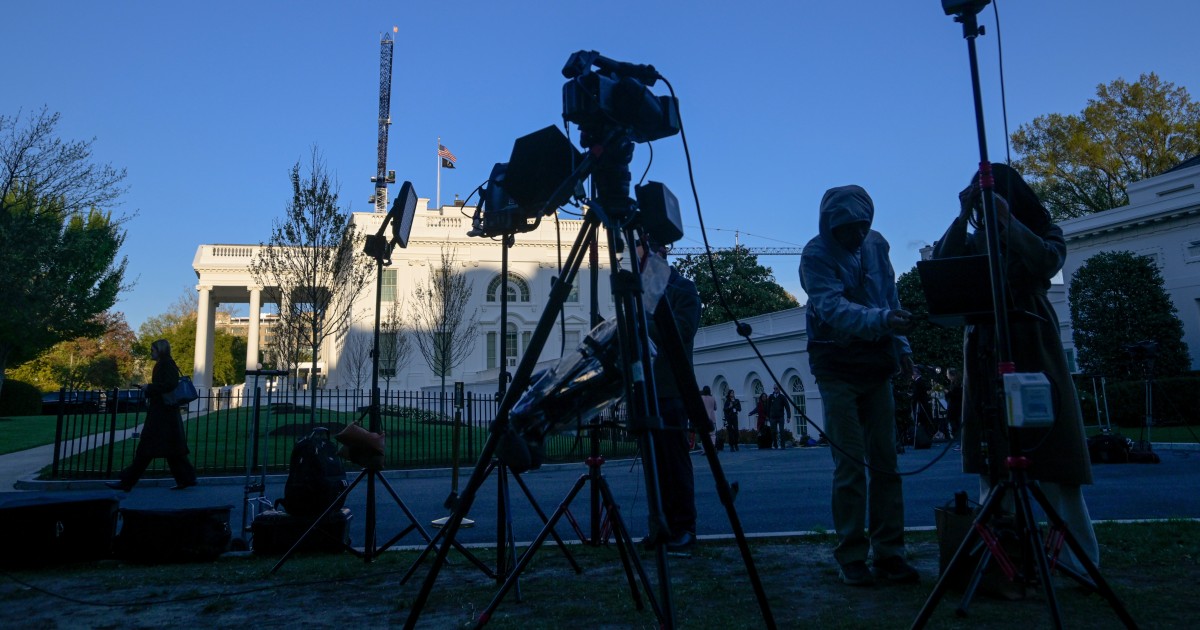
President Donald Trump has yet to make a decision on a deal that could extend the current ceasefire with Iran, with no announcement on Friday following a Situation Room meeting where he said he would make a “final determination.”
Get unlimited access to ad-free articles and exclusive content.
Oil prices have dipped this week amid persistent reports that Trump and Iran could be close to sealing an agreement that has eluded the two sides for over a month.
While U.S. and Arab officials have been indicating for days that the deal is close to being finalized, it still has yet to be approved by either side. Nearly a week ago, Secretary of State Marco Rubio had predicted there could be “good news” within hours, only for Trump to say he wouldn’t “rush into” an agreement.
Trump said Friday that Iran must agree to never have a nuclear weapon, that the Strait of Hormuz be reopened for “unrestricted shipping traffic, in both directions,” and that any mines in the waterway are “destroyed.”
He said he was meeting in the Situation Room “to make a final determination” about the deal, but that two-hour meeting wrapped without a further statement from the White House.
The agreement is expected to extend the current shaky ceasefire that has been in place since early April, though both sides have accused the other of breaching it with continued strikes.
U.S. officials said Friday that the White House was reviewing an agreement to start 60 days of discussions with Iran about its nuclear program, but neither side has signed off on the deal. Iran has painted a vastly different picture than the White House on the contents of the agreement and called U.S. demands “excessive.”
“As anticipated, the President of America is betraying diplomacy for the third time,” said Mohsen Rezaei, a senior official and former commander in chief of the Islamic Revolutionary Guard Corps, as reported by Iran’s semiofficial news agency Mehr News.
“By continuing the naval blockade and pursuing excessive demands in the negotiations, he has proven that he is not a person of negotiations and is pursuing other objectives,” he said.
A senior Arab official directly involved in mediating peace talks between Washington and Tehran told NBC News on Thursday that American and Iranian negotiators agreed to the terms of a truce deal days ago but that both sides have delayed finalizing and announcing it.
“It was already closed in Doha three days ago; now everyone is playing a game of chicken and egg,” the official said, describing the delays as “frustrating.”
Defense Secretary Pete Hegseth said Saturday that Trump was “patient” and wanted to make a “great deal” that ensures Iran doesn’t get a nuclear weapon.
Speaking at the Shangri-La Dialogue defense summit in Singapore, he said that “any deal with Iran would be a good deal.”
He later added that the U.S. would fulfill its “global obligations to ensure that, say, Iran doesn’t get a nuclear weapon,” and that it was ready to restart attacks on Iran if a deal cannot be reached.
“Our stockpiles are more than suited for that, both there and around the globe, so we’re in a very good place,” he added. “We are more than capable.”
Some changes have been made to the draft text of a possible deal between the U.S. and Iran in the past days, Iran’s semiofficial news agency Tasnim reported Friday, citing an informed source. It said the text had yet to be finalized. NBC News was not able to independently confirm the reporting.
Iranian Foreign Ministry spokesperson Esmail Baghaei also appeared to pour cold water on any signs of an imminent breakthrough.
“A final understanding has not yet been reached,” he said Friday in a phone call with state broadcaster IRINN. “Nuclear issues are not being discussed in detail at this stage and the focus is on ending the war.”
While a breakthrough remains elusive, oil prices fell as hopes grew for a deal between the U.S. and Iran to end the war that has consumed the Middle East for the past three months.
Brent crude, the global benchmark, was trading 1.8% lower on Friday at around $92 a barrel, with the price falling almost 20% in May amid signs of a potential deal to end the war and reopen the Strait of Hormuz.
The war and subsequent closure of the strait, a key trade route through which some 20% of the world’s oil passed before the blockade, have sent energy prices soaring over the last three months.
Freddie Clayton is a freelance journalist based in London.