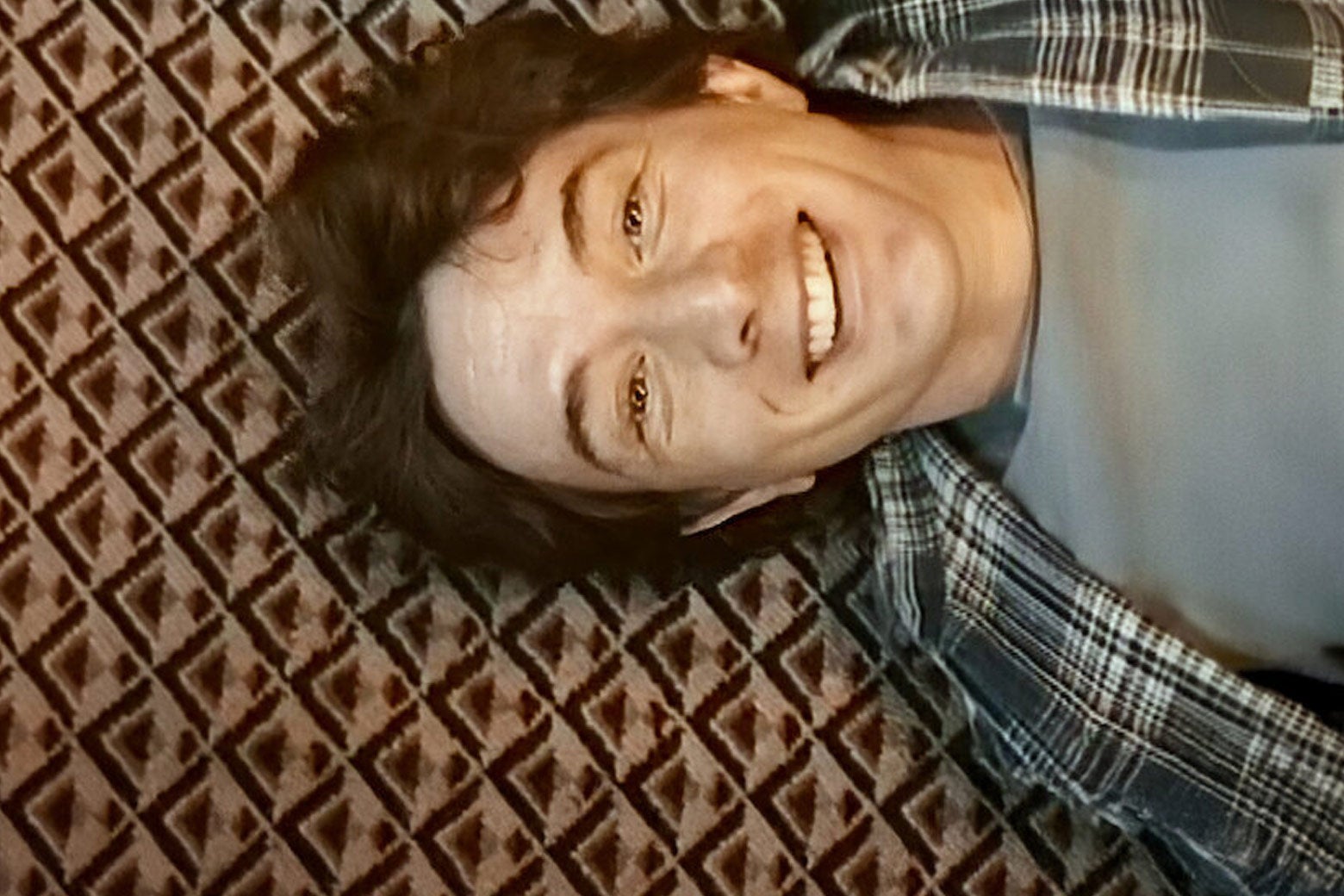
Marty, Life Is Short, the new Netflix documentary about comedian Martin Short, begins with an incongruity: It’s Boxing Day in sunny California in the early 1990s. That a holiday celebrated across British Commonwealth countries on the day after Christmas should be marked in the U.S. feels curious, but suddenly a slew of stars arrive—from Tom Hanks and Steve Martin to Eugene Levy and Catherine O’Hara—the latter pair of whom are, like Martin Short, who’s filming this old home-movie footage, famously Canadian. It’s a fitting scene on which to begin given that for much of his career, Short has felt to many people like he doesn’t quite fit in Hollywood, that he is somehow alien and out of place. He’s too short (literally). Too strange. Too much. And yet, as evidenced by the endless stream of celebrities who show up across the documentary in both archival camcorder video and as talking heads wanting to sing his praises, Hollywood has not been able to resist him. “Let’s say you’re going to host a dinner party and you invite Marty,” Steve Martin tells viewers, “then it turns out Marty can’t come? You cancel the party.”
Short’s career has been a peculiar one. For a long time, he seemed to struggle to truly reach leading-man status, always slightly eclipsed by his co-stars, serving as the second banana to Martin’s straight man. (Short self-deprecatingly insisted on calling himself “the cheap Amigo” in 1986’s Three Amigos, in which he co-starred with Martin and Chevy Chase.) He can’t do the understated deadpan that Levy can or play it straight like O’Hara did in Home Alone. He has, by his own admission, had a string of commercial failures—80 percent of his work, he estimates. Yet Short hasn’t just endured; he’s thrived. Now in his mid-70s, he’s enjoying arguably his greatest period of success, thanks to the Hulu hit Only Murders in the Building and sold-out live comedy shows across the country. He is beloved by fans and the industry.
Still, detractors remain, with criticism of Short—that he is grating, that he tries too hard to create shtick that’s divisive at best and unfunny at worst—having received space on this very website. A 2023 Slate piece by Dan Kois pulled no punches in its examination of Short’s “manic, slightly creepy intensity”—and prompted some forceful defenses of the comedian from both readers and fellow celebrities. But at the heart of Kois’ piece is a question that this new documentary, which began streaming on Tuesday, seeks to answer: Why are you being like this? It’s left to Tom Hanks to offer a solution of sorts at the film’s end: “Marty is busier and more in demand now than he has ever been. That is not coming out of a desire to stay on top or to fill his coffers or to stay relevant,” Hanks says. “Marty is doing it because the opportunity is there to have a blast.”
In part, Short is who he is because of his family. “I profited from trickle-down comedy,” Short says in the documentary of a childhood in Ontario as the youngest of five children where the goal was to make each other laugh. When Short was 12, his eldest brother, David, was killed in a car accident. Both of Short’s parents would also be dead by the time he was 20. Short says this period of darkness left him with a choice that became an important life lesson: Collapse and “become defeated forever?” Or “learn that life is short and have a glass of wine and fun?”
After graduating with a degree in social work, he and best friend Levy left to try their luck in entertainment in Toronto, where he was cast in a now legendary 1972 production of Godspell that also starred Levy, Andrea Martin, Gilda Radner, and Victor Garber. From there, he eventually found his way to sketch comedy, joining the Toronto outpost of the Second City improv group, which later produced the Canadian sketch show Second City Television. By the mid-1980s, he was at Saturday Night Live in the U.S. Across these gigs, Short developed his particular brand of comedy: one that is sketch- and character-oriented and that requires his fellow comedians to place a great deal of trust in him.
Short’s most famous comedy creations—the manchild Ed Grimley, with his hair forever gelled into a cone, and the obnoxious entertainment journalist Jiminy Glick, in thick glasses and a voluminous fat suit (views about which have evolved since the character was created in 1999)—embody his first rule of comedy: An outrageous appearance is half the job. “I always figured that if you walked on stage and you looked totally insane, you’d get a laugh,” Short says, “and then you were halfway there.” But this approach is also one that some find off-putting. Short’s comedy doesn’t so much worm its way into your brain as it does strike you over the head.
And yet, inherent in swinging for the rafters is getting comfortable with striking out. Short bemoans that a string of movies in the 1980s and ’90s flopped fantastically at the box office or became legendary objects of critical loathing, like 1994’s Clifford, in which he played a 10-year-old boy. (“It’s not bad in any usual way. It’s bad in a new way all its own,” Roger Ebert wrote of the movie.) But Short’s mantra—“98 percent of it is failure; nothing works and then something works”—is also proof that big risks can sometimes earn big rewards, especially in the hands of someone who seems fascinated by idiots and is deeply good at playing them. “It’s actually quite hard to make a completely bizarre character real,” Steve Martin says, “and that’s what he does.”
Short seems to know he’s not everyone’s cup of tea, that his art is “specific” and “unusual.” But in his mind, playing a role that 200 other actors could do would be a waste of time. It’s the weird stuff, the niche material, that makes him the happiest.
One of the more interesting things that Marty, Life Is Short does to stand out from the slew of other recent biographical documentaries (there has been a spate in recent years on comedy icons, in particular, including Steve Martin, Mary Tyler Moore, Eddie Murphy, Gene Wilder, Chevy Chase, Albert Brooks, and Lorne Michaels) is adopt a slightly meta approach to the whole process. The film is made by Lawrence Kasdan, the writer-director of The Big Chill and the writer of Raiders of the Lost Ark, who Short tells us right away is a dear friend with whom he’s dined a million times. (Short jokes at the top that he’s worried the movie will be a hatchet job that he’ll refuse to promote.) The comedian frequently looks to the camera and breaks the fourth wall whenever he’s asked to film B-roll, and at one point, as Kasdan films Short sipping coffee, the Canadian says, “We’re staging a breakfast I’ve already eaten,” before proceeding to take mock bites of the eggs and bacon before him. “Mmm! That’s so good!”
The combined effect is to reiterate what we’ve heard about Short from himself and others across the entire documentary: that he is wholly and indefatigably dedicated to having a good time. In the huge trove of home movies we are treated to, we see Short cavorting with everyone from Sally Field to Goldie Hawn, Steven Spielberg to Rita Wilson, at Christmas celebrations and at private getaways to the Short family cabin by an idyllic lake in Ontario, and in all the clips, they seem to be cackling endlessly. “Marty operates at the speed of joy,” Hanks says.
Short appears in character as Glick at the film’s end, as if to tie all these threads together, but also to disarm his critics with—what else?—humor. “I don’t really find him very interesting,” Glick says of Short. “I find people who push too hard and are desperate for the approval without really presenting any reason for the approval—I find it offensive.”
“There’s basically three voices, two hairstyles, and four dance moves,” Glick jokes. “And you can’t build an empire on that.” That line may be the biggest joke of all.