Less than three days after settling on a deal, the ceasefire agreement in the U.S and Israel’s war against Iran is already under strain, as Vice President JD Vance prepares for Saturday’s negotiations in Islamabad, Pakistan.
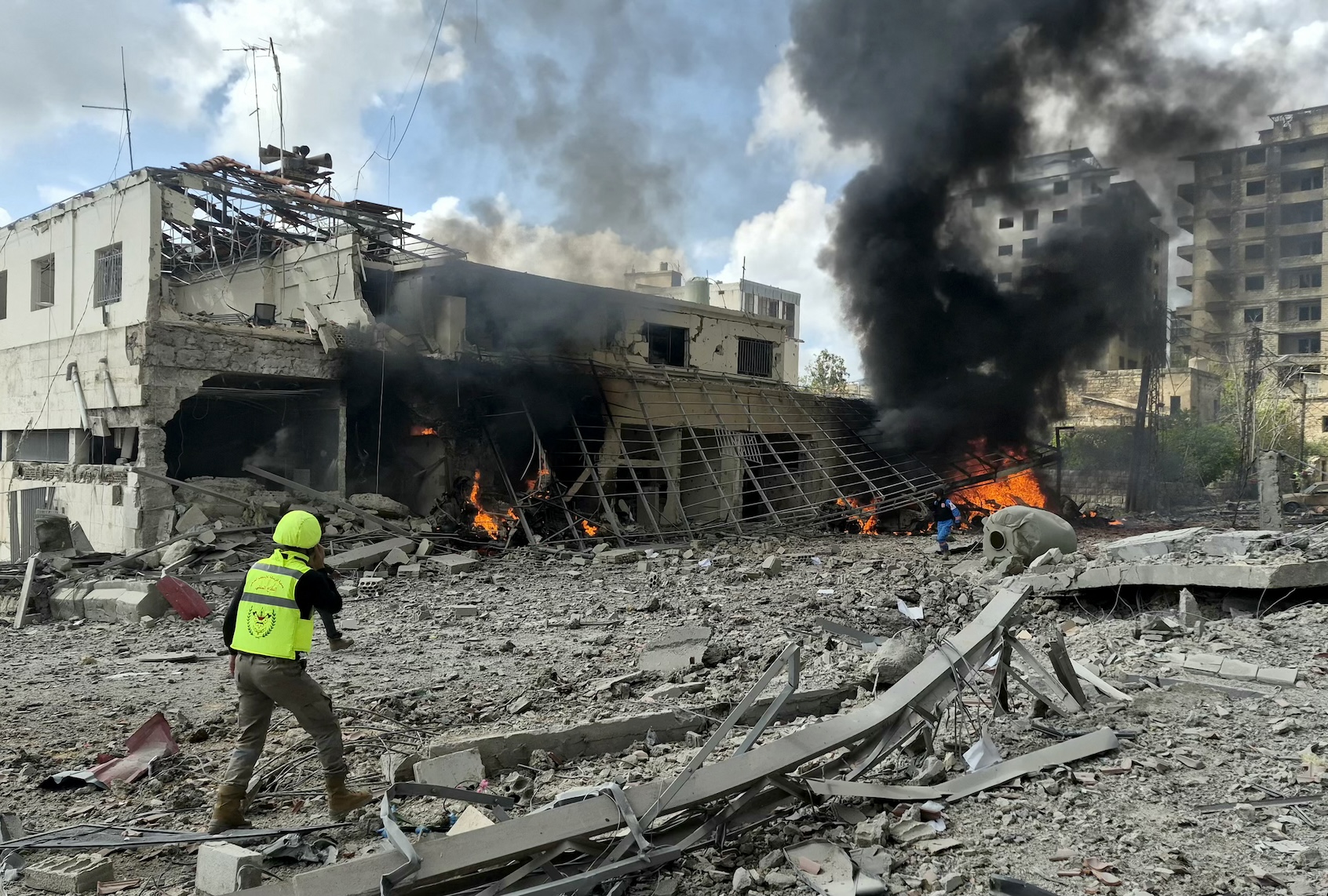
Israel’s invasion of Lebanon remains one of the biggest roadblocks in maintaining the ceasefire and fully opening the Strait of Hormuz, a major chokepoint for shipping traffic in the area. Iran has called Israel’s refusal to stop attacks in Lebanon, claiming to target Iran-backed militant group Hezbollah, a violation of the ceasefire.
“There is no ceasefire in Lebanon. We continue to strike Hezbollah with full force,” Israeli Prime Minister Benjamin Netanyahu said Thursday. Iranian officials and President Donald Trump have both requested Netanyahu back off the attacks. Israeli strikes killed more than 300 Lebanese people in a single day Thursday, as Amnesty International made an “urgent” call for Israel to “uphold its obligations under international humanitarian law and ensure civilians are protected.”
“I just think we have to be sort of a little more low-key,” Trump said to NBC News Thursday about Israel’s attacks in Lebanon. Vance echoed sentiments in Hungary, saying Israel needs to “check themselves a little bit.”
Iranian officials were more forceful in their language, and directly put Saturday’s ceasefire negotiations on the line.
“Two of the measures mutually agreed upon between the parties have yet to be implemented: a ceasefire in Lebanon and the release of Iran’s blocked assets prior to the commencement of negotiations,” Mohammad Baqer Qalibaf, Iran’s parliament speaker, said on X Friday. “These two matters must be fulfilled before negotiations begin.”
Though Trump promised the strait would fully open, Iran has been maintaining strict control of the waterway and only allowing a slow trickle of ships through. The only ships getting through so far are from countries either directly allied with Iran or not deemed hostile, such as France, the first western country to have a ship come through the strait since Iran restricted the trade route.
“France has positioned itself as not aligned with the U.S. on the war, and so not hostile to Iran,” Martin Kelly, the head of advisory at consulting firm EOS Risk Group, told the New York Times.
As restrictions remain on the vital trade route, Americans are beginning to see financial impacts beyond the gas pump. New Consumer Price Index data released Friday showed prices have risen 3.3 percent over the year and 0.9 percent in March.
This spike is the highest in two years and is the first indicator of the widespread financial impacts of the U.S.-Israel-Iran war beginning at the end of February. The increased price of fuel oil and gasoline experienced the highest increases, accounting for over 30 and 21 percent jumps respectively between February and March.
The Trump administration is adamant that these spikes are temporary and will show quick recovery as ceasefire talks with Iran move forward.
“As the administration ensures the free flow of energy through the Strait of Hormuz, the American economy remains on a solid trajectory thanks to the Administration’s robust supply-side agenda of tax cuts, deregulation, and energy abundance,” White House spokesman Kush Desai said.
However, with Israel’s continued actions in Lebanon threatening negotiations, prices may not ease up for American consumers anytime soon.