I’ve enjoyed decades of sandwiches—thin stacks of corned beef shuffled in between slices of double-baked rye bread; Italian hoagies on seeded rolls with hot peppers; soothing PB&Js; cemitas poblanas with stretchy Oaxacan cheese; falafel, cutlets, cabeza, chicken salad, egg salad, tuna melts, and lobster rolls—and not a single one of them made me shed a tear.
To be clear, I’m not talking about crying while eating. I’ve done that plenty of times.
Back home in Western Pennsylvania, there’s a Greek Orthodox church that sells Syrian bread—a round, leavened, circular disc that’s soft and rippable. For years, my uncle picked up that bread for the family every Tuesday. He died on a Monday, which means he had an outstanding order of bread placed with the church. So we picked it up, the day after his death—my father, brother, and I—and took it back to his empty home, sat at the kitchen table, and sopped up olive oil with the still-warm bread while we wept. Three men in the family, reluctantly processing their emotions, each one of us a little too dense to understand that dragging the bread through the golden oil was pretty ham-fisted symbolism for wiping away our tears.
Another time, an ex-girlfriend and I broke up over takeout. Sitting across from her at our kitchen table, I couldn’t even speak without crying. But I quickly realized that I couldn’t actually cry while chewing. Almost like my face was telling me, “Pick a lane, dude.” So, just to get the sentences out, I started shoveling in some pretty mediocre breakfast tacos. And with full mouths we decided that I would take the dog.
But these foods were the effect of tears, not the cause.
Rarely am I blindsided by tears. In fact, this is going to sound insane, but I like to schedule my cries.
Here’s how it works: When I sense myself becoming emotionally ragged, when I can feel the weight of my thoughts and feelings building up, I take an evening, light a couple candles, and play my favorite sad song (almost always some manipulative, neoclassical tune made for a movie). Then, I do the damn thing. I cry.
I let out a Gatling gun of sobs, sniffles, boogers, snot, tears, and shoulder heaves. I allow, just for this evening, my face to break into pieces, and I give myself the grace to verbalize any remorse or pain out loud. Of course, this is all hilariously about control. You don’t tell me when to cry. I’ll decide who cries and when around here.
But control is futile, and a couple weeks ago, I was totally caught off guard. All because a stranger made me a simple tomato sandwich.
I was overworked—tattered, tired, bleary-eyed, anxious. Emotionally, I was a void. Completely burnt out. I couldn’t even access my feelings enough to make time for my psychotic little cry appointment.
I walked into a cafe, lugging my laptop underneath my right arm, a machine that I’ve come to resent. I wasn’t at the cafe to talk to anybody, or to ask anyone else how their day was. I wasn’t there to make eye contact or to pet a dog. I didn’t go there to find community or to read a book or write in a journal. I desperately needed all of those things, but at the same time I was unyielding in my decision to deprive myself of them. I was there to meet deadlines, scheme dollars, to perform my little function in a system that wants all of us dead.
Then, one of the staff members, perhaps clocking that I was a ticking time bomb, asked me how my day was. And it sounded genuine. The nerve.
Sensing earnestness, I told her. That I bemoaned my job, that I needed a break, that I felt like I was working myself blind. She encouraged me with soothing, practical advice, no platitudes: Ask my boss for some vacation time, stick to that vacation time (no laptop), use some to visit family. And, she didn’t stop there. “Do you want me to make you something to eat?” She said it with such kindness, like a grandmother would to a child after a hard day at school. Our relationship was no longer merely transactional.
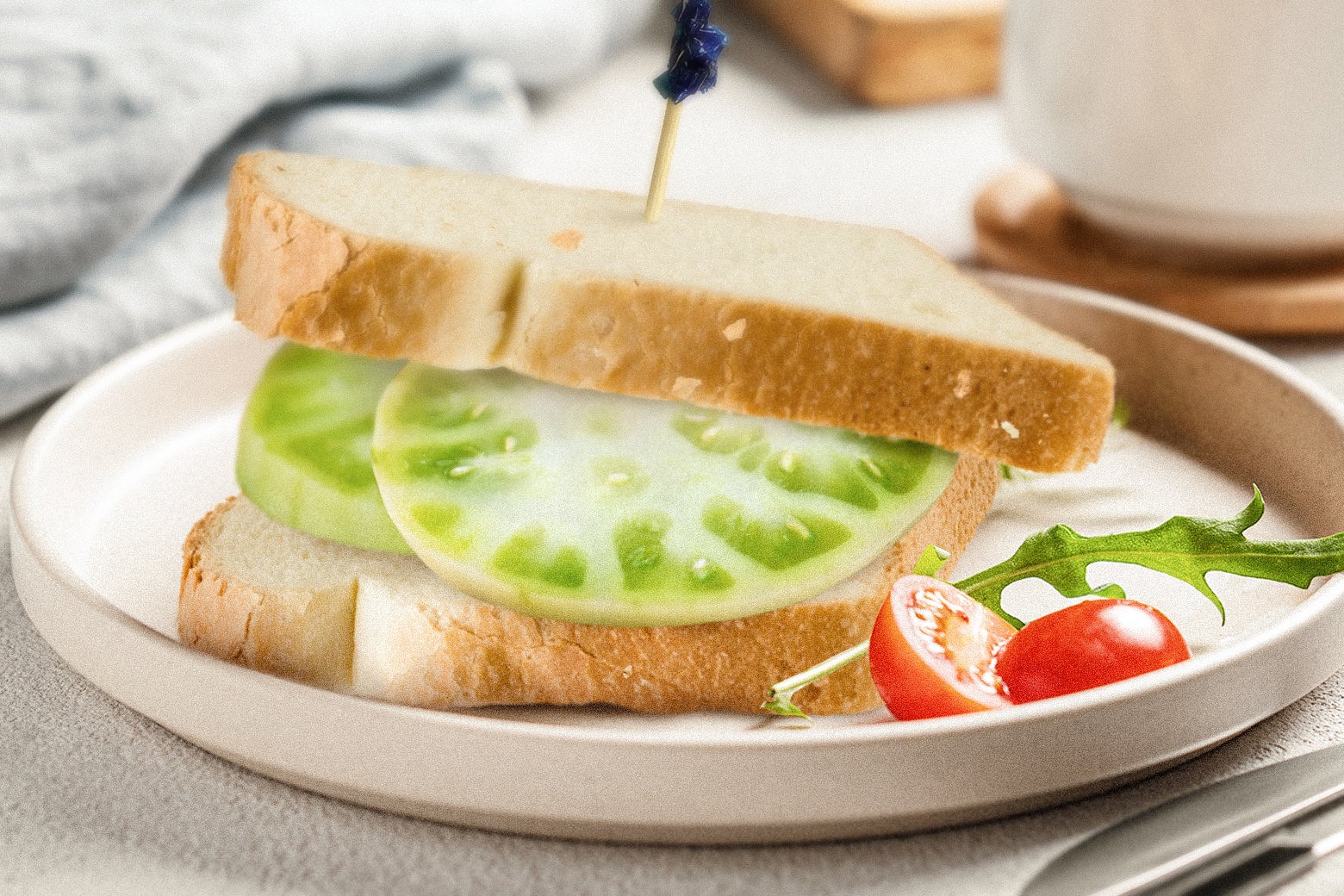
I nodded. She went behind the counter and got busy. What resulted was a simple, off-the-menu, free-of-charge tomato-and-cheese sandwich: porous and perforated sourdough bread from the bakery next door, garden tomatoes seasoned with salt and pepper, and a spreadable, meltable, goat-gouda cheese rendered gooey underneath the broiler. I shut my laptop and watched it come together—a gorgeous, open-faced one-hander blanketed with those juicy tomatoes, white cheese bubbling through their locule chambers, and crispy, burnt edges of sourdough that outlined the toast like a family photo.
She softly set the plate on the countertop’s cool, limestone lip, and it made a sound. I swear to God, more than the sandwich, it was the sound. That sound devastated me. The plate made a heavy, ancient noise. If the sandwich were on a paper plate or a napkin, it wouldn’t have resonated the same way. Ceramic had to hit sediment. I had to hear that gentle, cold thud. I started to think that maybe I was losing my mind, because I began to picture every plate reverberating through history. Thousands of years of people sharing meals in huts and houses, in castles and dining rooms. During famine, and war, family strife, dinner parties, weddings, holidays, celebrations, and wakes. The plates all made that same, singular sound. That ubiquitous, heartfelt, charitable skid. You’ve heard it. I can hear it now. A plate is so important.
Is this just the nicest thing you can do for somebody? When was the last time someone listened to my problems and then made me a sandwich? When was the last time I wanted someone to do that?
Intense, emotional response to food is a plot device, a critical third act resolution you see in movies like Pig or Ratatouille. Of course, it’s not the meal itself that makes the character heavy with emotion, but what it dredges up. Food is often revealing—what did this tomato-and-cheese sandwich reveal about me? A deep longing to be cared for and to care for others? Sure. The realization that I’m often afraid to accept such care? Definitely.
“Are you hungry?” is a much different question than “Do you want me to make you something to eat?” One is a functional, pragmatic query; one is asking somebody to sit down, take a load off, humble themselves, and accept a little kindness and a little bit of someone else’s time.
How are you? Do you want to talk about it? Here’s a sandwich on a plate. I made it just for you.