The price of oil surged more than 7% Wednesday after President Donald Trump said the U.S. ceasefire deal with Iran was “over,” and the United States was planning additional strikes.
Get unlimited access to ad-free articles and exclusive content.
Meanwhile, U.S. stocks fell on Wednesday, compounding an existing sell-off fueled by concerns about chip and tech stocks.
As of mid-morning trading, the S&P 500 and Nasdaq Composite both tumbled more than 1% and the Dow Industrial Average fell more than 800 points. The Russell 2000 index, which tracks small and mid-cap companies, tumbled 1.8%.
The price of U.S. crude oil jumped to nearly $76 per barrel in the wake of Trump’s comments, its largest one-day move up since the beginning of June. International oil benchmark Brent rose almost 8% to $80 per barrel.
“I think it’s over,” Trump said about the ceasefire, on the sidelines of the NATO summit in Ankara, Turkey. “I don’t want to deal with them anymore.”
Trump said negotiations could continue, but he considered them a “waste of time.”
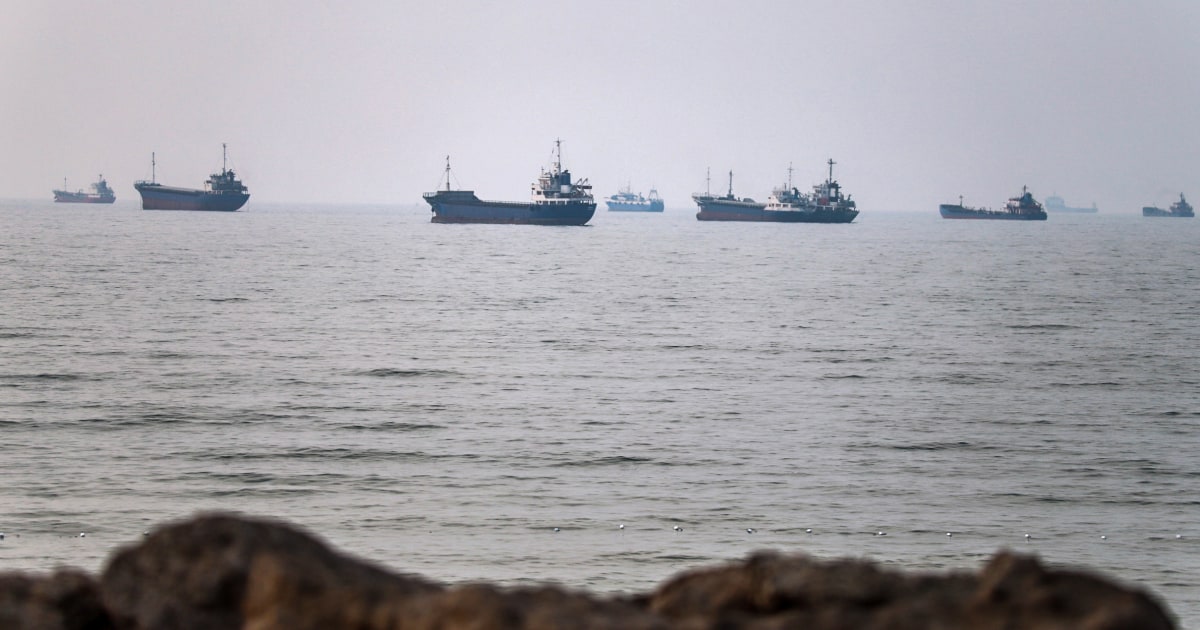
American forces will “probably hit [Iran] again tonight,” Trump said later in the morning, adding that the U.S. military “may take over Kharg Island,” an export hub for Iranian crude oil. Likewise, the president floated a reimposition of the American naval blockade on Iranian ships in the Strait of Hormuz.
The big jumps in energy prices came one day after jitters returned to oil markets, sending U.S. crude oil prices from about $69 to more than $72. Heating oil prices, a proxy for jet fuel, also climbed 12%. Wholesale gas futures rose 6%.
The rapid rise in oil prices also underscores how fragile the recent drop in U.S. consumer gas prices are. The national average price per gallon has fallen from a high of $4.56 in May to $3.79 as of Wednesday morning. But the drop has effectively come to a halt this week and the national average has remained flat over the last two days, according to AAA data tracked by NBC News.
Government bonds also sold off, driving yields higher. The 10-year U.S. Treasury yield rose as high as nearly 4.6%, its highest level since May.
Airline stocks were some of the hardest hit shares Wednesday. United Airlines tumbled more than 4%, Delta Air Lines slid 3%, and Southwest Airlines fell 2.5%. Other travel stocks, such as Booking Holdings and Carnival, fell 5%.
With oil prices rising again and inflation fears returning to the forefront, other companies that rely on discretionary consumer spending also tumbled. DoorDash fell 6%, Home Depot and American Express fell 3% while Nike, Proctor & Gamble and McDonald’s dropped 2%.
Global stocks also sold off, with Spain’s flagship index falling more than 2%. Benchmark indexes in Germany, France, Italy and the U.K. were all down by around 1.5%.
On Tuesday, the U.S. said that Iran struck three commercial vessels near the Strait of Hormuz. Tehran has not claimed responsibility for the attacks.
Later in the day, the U.S. Treasury revoked a sanctions waiver that allowed Iranian oil to be sold into the global market and U.S. Central Command launched “a series of powerful strikes against Iran” in retaliation for the vessel attacks.
“The latest attacks have lifted oil prices, weighed on equity markets and reminded investors that while a ceasefire remains in place, a lasting agreement between the US and Iran is far from guaranteed,” she added.
After the U.S. and Iran signed a memorandum of understanding in mid-June, U.S. oil prices stabilized around $69-$70 per barrel and remained there for the better part of three weeks.
“For markets and the global economy, the prospect of a swift return to pre-conflict energy and goods flows through the waterway is fading,” said Geoff Yu, senior market strategist at BNY.